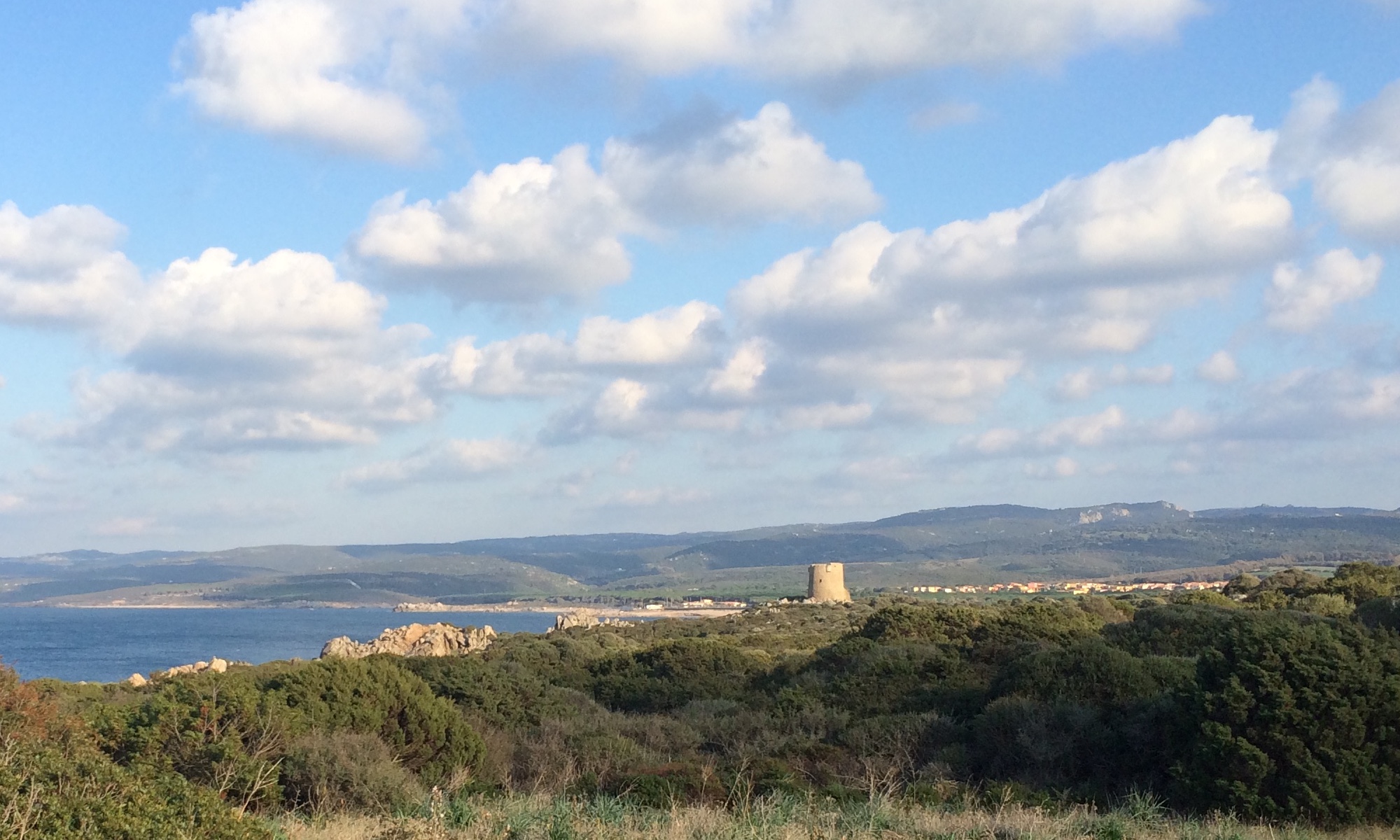
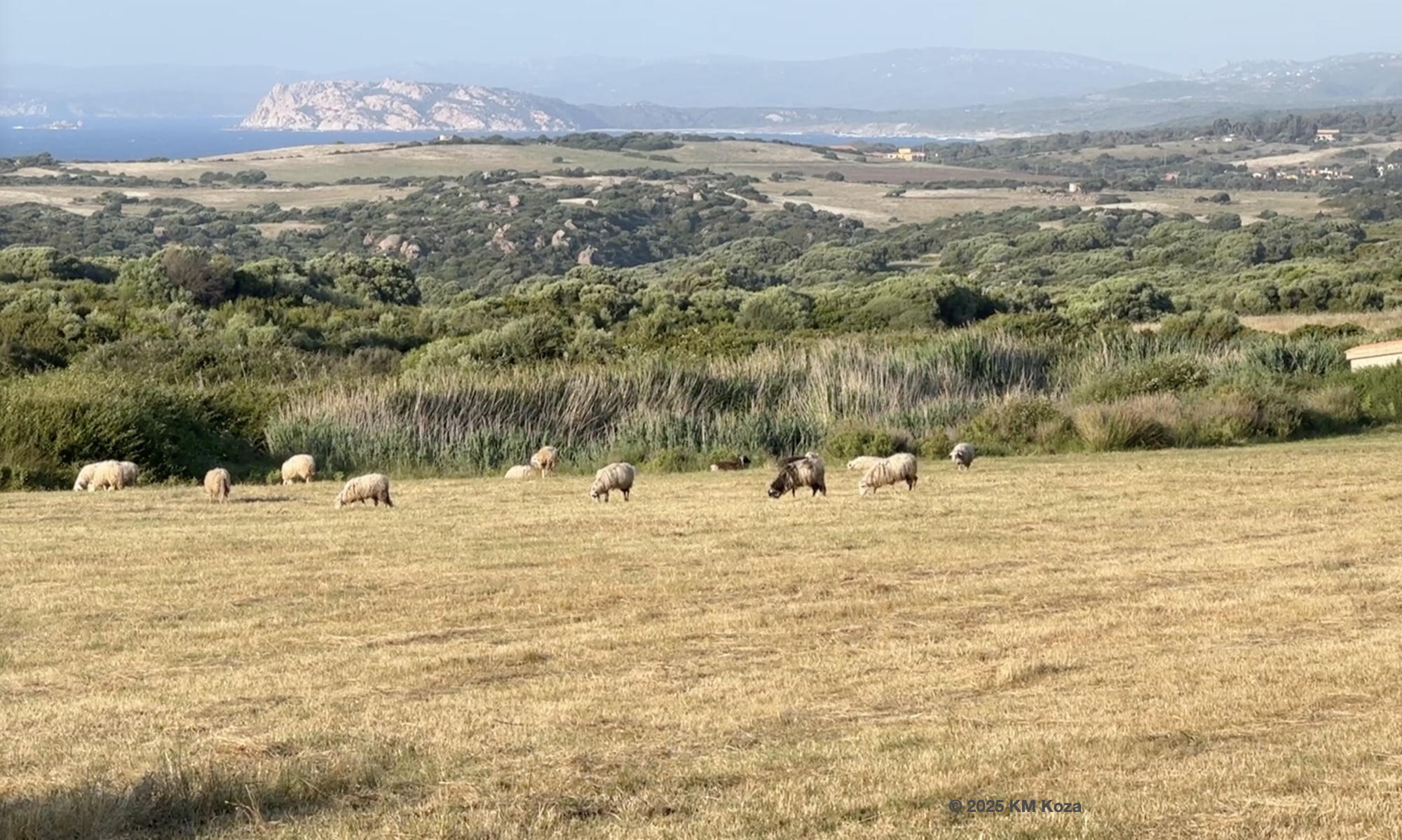
This is a silent video, so there is no transcript. The video shows almost nine minutes of a beautiful sunset over shimmering water with a view of Capo Caccia, near Alghero, Sardinia.
I’ve been exploring corners of Sardinia since 2013, and soon I’ll be sharing my love and favorite people, places, and experiences with you on these tours!
Transcript
Welcome to another episode — and thanks for tuning in!
You may have seen on the website that I’ve organized several tours for those of you who want to explore Sardinia in 2026. I’m excited about these, primarily because I’m really looking forward to sharing my love of Sardinia and the joy I feel on the island, the experience of being with welcoming, wise, grounded and artistic people, of being in a place where the beauty of land, sea, nature, arts, and culture seeps into everything, and embraces us in a way of being that welcomes and extends our humanity.
I personally designed these tours for travelers who want to experience Sardinia, not merely glimpse what’s generally shown on social media or found in tourist books. I’ve been exploring and getting to know the island and her people more deeply since 2013, and I chose and matched adventures for the tours that will give you unique experiences that expand your appreciation of Sardinia’s natural beauty, culture, history, people, and arts — including food, wine, and — of course — textiles!
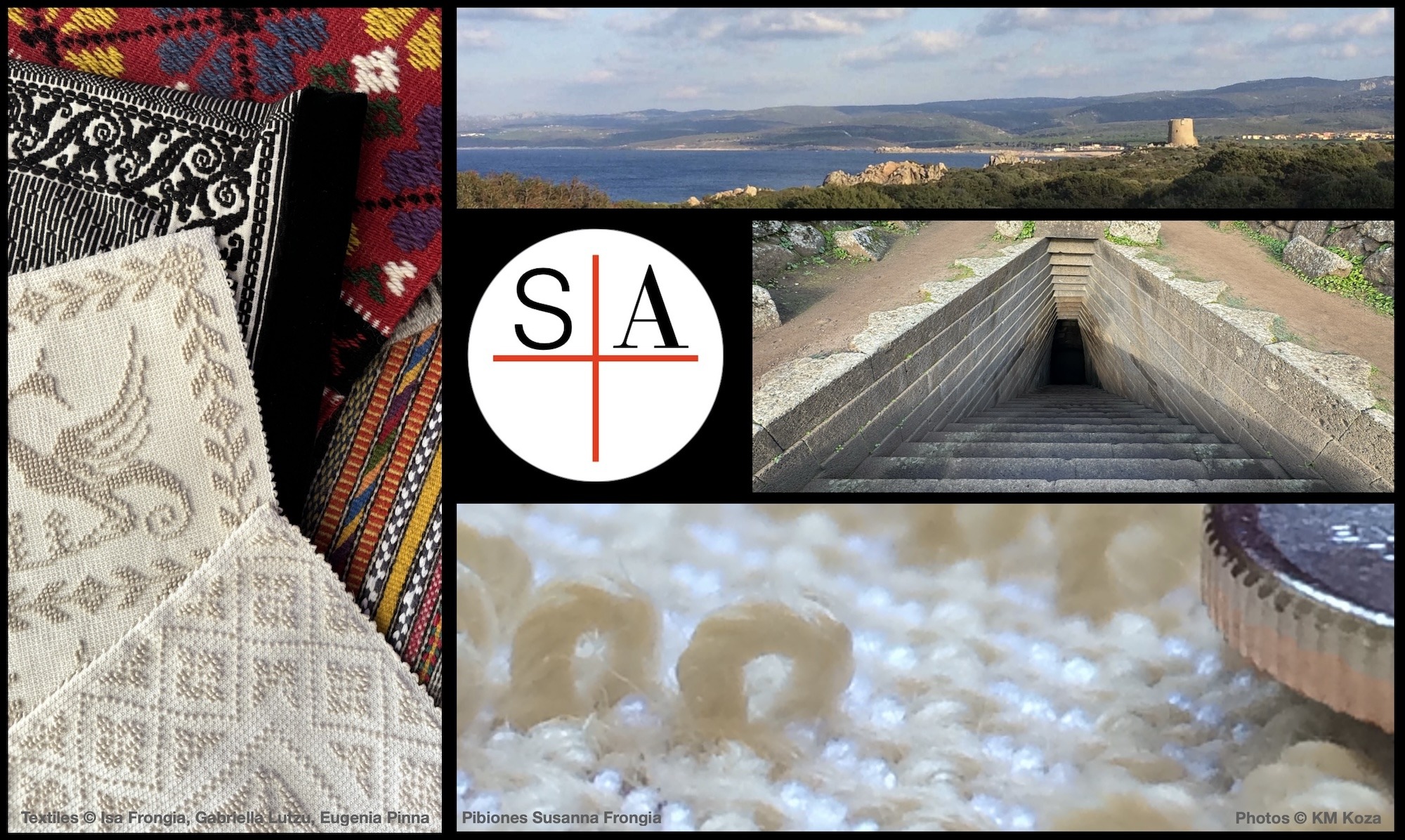
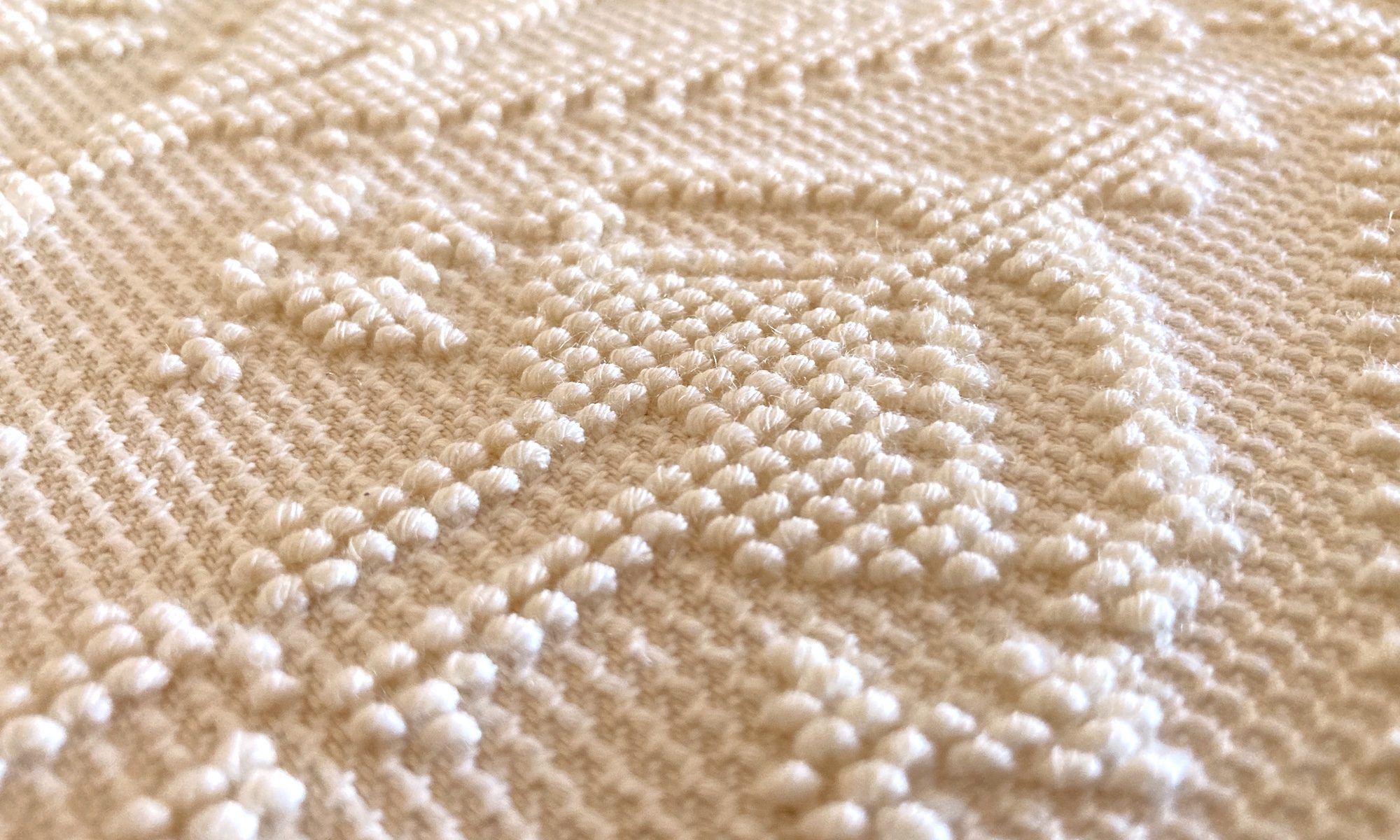
Yes, we’ll visit the traditional handweaving artists mentioned on the Sardinian Arts website, including those featured in my film I Want to Weave the Weft of Time. If you’ve wanted to learn the pibiones technique, you’ll have the chance to learn from the living masters! You’ll also learn about Sardinia’s other weaving traditions and techniques, as we’ll visit several weavers in their studios in different areas of the island. While you can try your hand behind a loom, these are tours to introduce you to the artists and their ways, not workshops where you’ll create a textile to bring home. I do, however, encourage you to purchase finely woven textiles or other items directly from the artists we visit!
In addition, we’ll visit some fibers-related shops and explore wonderful museums that have inviting displays of traditional clothing from across the island, and allow us to immerse ourselves in ethnographic experiences of the everyday life and tools of Sardinia through recent centuries. We’ll see the history of several other arts and learn about cheese-making, food-preparation, and more. We’ll also have hands-on experiences beyond textiles, such as learning how to make — and making —several varieties of traditional Sardinian pasta shapes with a master chef.
Even if you’re not a textile artist, there’s a tour and adventure for you.
We’ll explore places rarely traveled by visitors and also take in some of Sardinia’s well-known and often breathtaking landmarks. We’ll visit prehistoric nuraghe, the famous towers that dot Sardinia, some still standing tall, some not so intact. Many are unique structure; some have attached settlements. We’ll see tombs of the giants and sacred wells, millennia old, that are aligned with lunar phases. Some of these wells, as well as sacred fountains, have been used by succeeding civilizations, such as the fountains in the Roman town of Tempio Pausania —still a thriving town —or the Sacred Seven Fountains in San Leonardo, which became a monastery and hospital for knights returning from the Crusades.
Roman centers and baths with still-accessible hot springs are on the itinerary, and we’ll travel over Roman bridges still in use, and sometimes, on modern highways that follow the routes laid down by Roman roads. We’ll also visit Spanish towers —small castles —and historic city centers with roots hundreds – or sometimes thousands – of years old. As we travel, we pass so many monuments, churches, and towns of different ages that it’s impossible to stop at each one we see! The scenery of the island is diverse, and as we move from region to region, we go from sea-facing cliffs to beautiful vistas of il mare, to inland, rich with forested hills, rough mountains, and high plains, then back to dramatic areas of expansive seashore rising into rugged mountains.
We’ll spend some time relaxing at indescribable beaches —Sardinia has many of the beaches listed as the most beautiful in the world —and take short walks to absorb nature’s scents and sights along the seashore. We’ll also spend time in old city centers, where you’ll experience stone-lined streets, quaint alleys, centuries-old buildings housing exquisite restaurants, tiny arts shops, and more. We’ll stay in beautiful hotels and country estates with exquisite home-prepared food and wine — there is so much to delight your mind, senses, and spirt! On one of the tours, weather permitting, we’ll even take a boat ride to a stunning cave at the base of an oceanside cliff —and take a tour inside the cave! Sardinia is both rough and gentle, and there’s so much to see, sense, and feel that it’s hard to describe.
While we experience much, the trips have a relaxed pace so that you can better feel and imbibe Sardinia’s unique essence. Itineraries are a bit flexible to ensure we can take advantage of any synchronistic opportunities to attend micro-local events that may pop up, or adapt if the weather surprises us. I personally organize and direct each tour, based on my experiences and knowledge of the island, to provide amazing, memorable, and relaxing experiences you’ll treasure. An assistant tour director will accompany me, and Sardinian guides and artists will share their expertise as we move through the island. Groups are limited to a maximum of 12 guests, which enables us to get to know one another comfortably. The small group size also ensures we won’t overwhelm our hosts or the locations we visit. During registration, I’ll also talk with each guest to ensure the tour is the right fit for you.
I’ve planned two tours for 2026, one in the spring, and one in the fall. The May tour emphasizes Sardinian handweaving while also bringing us to natural, historic, and sacred spaces of the island. The October tour explores handweaving and other arts, and offers a few more excursions to natural, historic, and sacred spaces. Both tours are definitely for travelers who want to gain understanding and have experiences that are not found on the typical Sardinian tourist itinerary!
As I said at the start of this episode, I’m really looking forward sharing my love of Sardinia and the people and places we visit with you on these tours. So, if you’re a traveler — it doesn’t really matter if you are a weaver or a textile aficionado or just a lover of culture, if you’d like to experience Sardinia and the island’s beauty, art, culture, history, nature, textiles, and people, do come join me on a tour! See SardinianArts.com/Tours for more info, and email me at KMK (at) SardinanArts (dot) com if you’d like to come to a Q&A session about the tours, or know more.
I look forward to hearing from you — and to having you join a tour with me.
In this episode, Kelly Manjula Koza discusses the unquantifiable value of the handmade, the priceless process of making, and the ineffable understanding that a handwoven textile is more than just a thing. These are golden elements the Sardinian handweavers and artists teach us. This understanding is a leitmotif you’ll find runs throughout Sardinian Arts.
Transcript
This podcast was taken from the article of the same name on the Sardinian Arts site, so see that page for the transcript. I decided to record the piece as a podcast because it is an important message, one many people have told me strongly resonates with them.
The “wool issue” is common to Sardinia, the US, India, and many places across the world. The dearth of mills and skilled people to clean and process wool (or cotton) has hindered availablity of wool for weavers and other artists, and hurt those who raise sheep and goats for their wool.
Grassroots efforts to address this are grow across the globe, and international organizations such as Fibershed.org help connect efforts. The World Hope Forum is also now addressing this issue, led by WHF founder Li Edelkoort (Founder of NY Textile Month and other initiatives) and actress Isabella Rossalini (who raises sheep for wool in New York State with her daughter).
WHF held several days of wool-related conferences in Rome in early October, and now offers a free one-day online conference on October 19. Yes, it’s early for those on the US West Coast, yet WHF forums are in my experience great, and worth the early coffee!
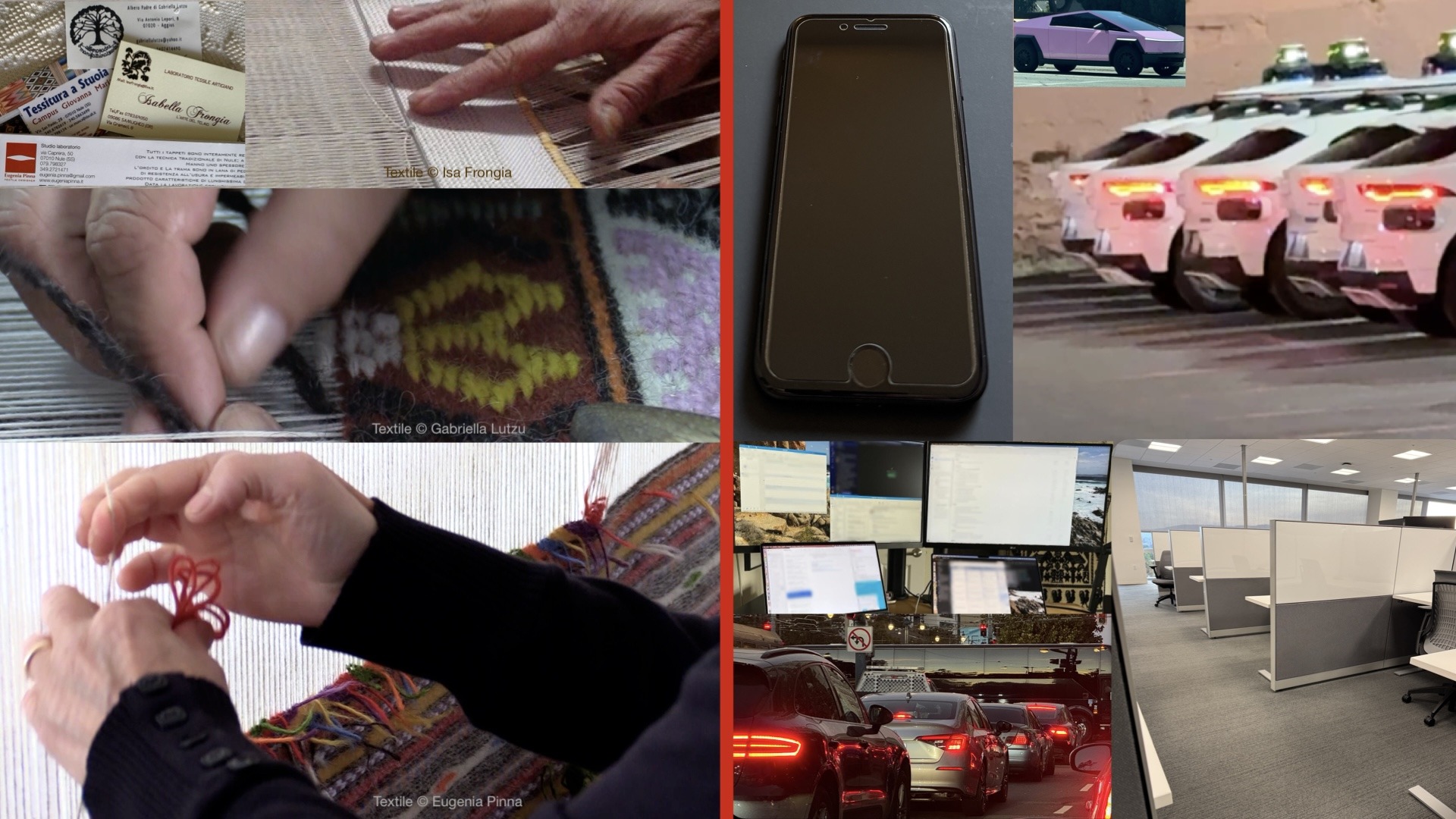
Last night I was talking with a number of local handweavers (and spinners, dyers, and fiber artists in general) and yet again the subject came up about how people who have never woven, spun, dyed, crocheted, etc. generally 1/ vastly underestimate the complexity of these arts, and the science, math, engineering, and overall STEM skills required, and 2/ don’t understand the foundational role textiles have played in everything from writing to commerce, industry, chemistry, engineering, physics, and so much of our modern world.
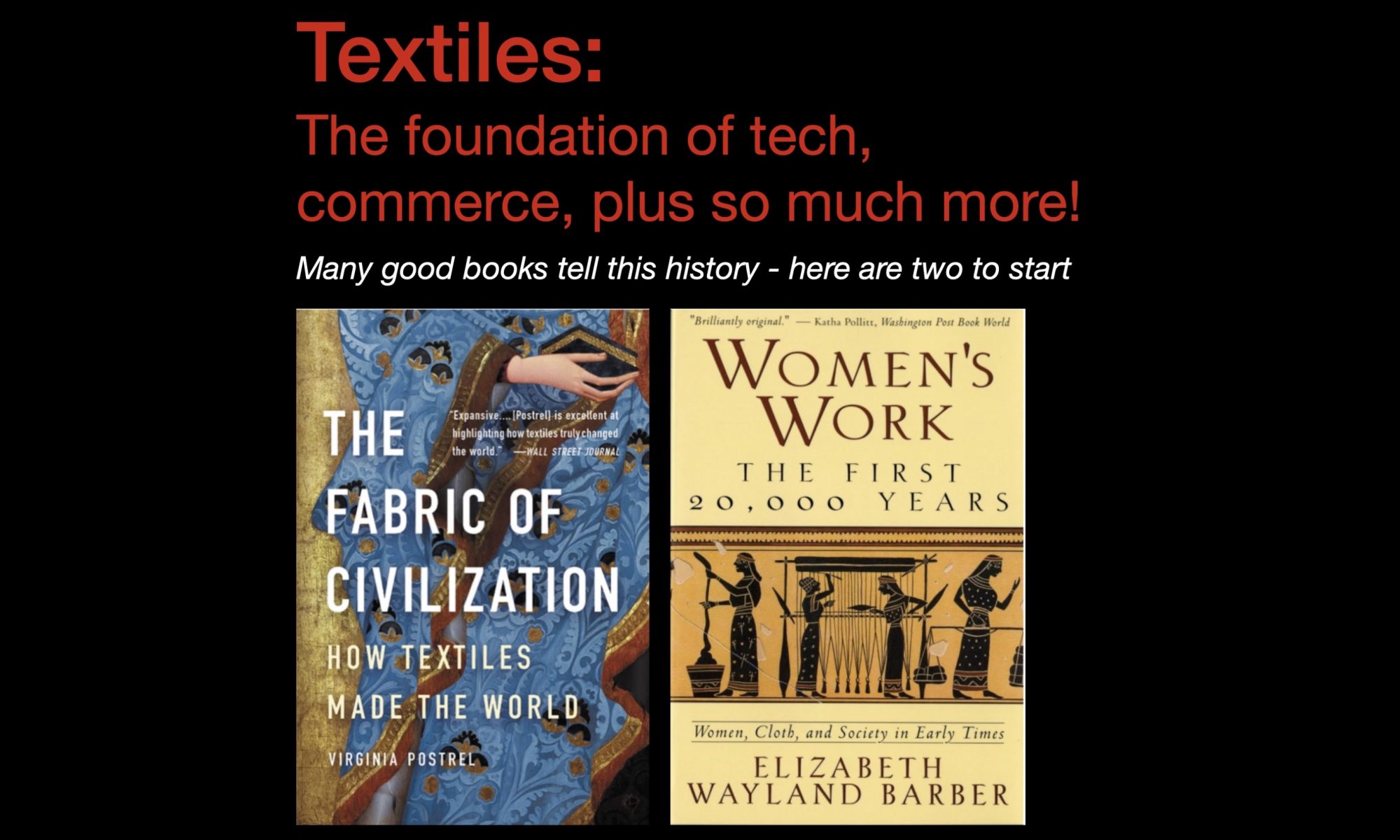
In last night’s discussion, several of us agreed these two books (among many) are great starting points to understand this complex and under-told history:
The Fabric of Civilization, by Virginia Postrel
Women’s Work – The first 20,000 Years, by Elizabeth Wayland Barber
Life continues its fast pace, and I haven’t posted or written much in the past months because so much has been in motion – including me!
May and June found me zig-zagging across Sardinia. I posted a few tidbits about my adventures while on the road, yet I prefer to stay present with the people, places, and experience in front of me, sharing photos and stories later. Over time, you’ll see these trickle out on social media, here on the blog, and in presentations.
July and the first part of August (the months tourists traditionally vacation in Sardinia!) found me heads-down at the computer planning new adventures — including the tours of Sardinia that so many of you have requested!
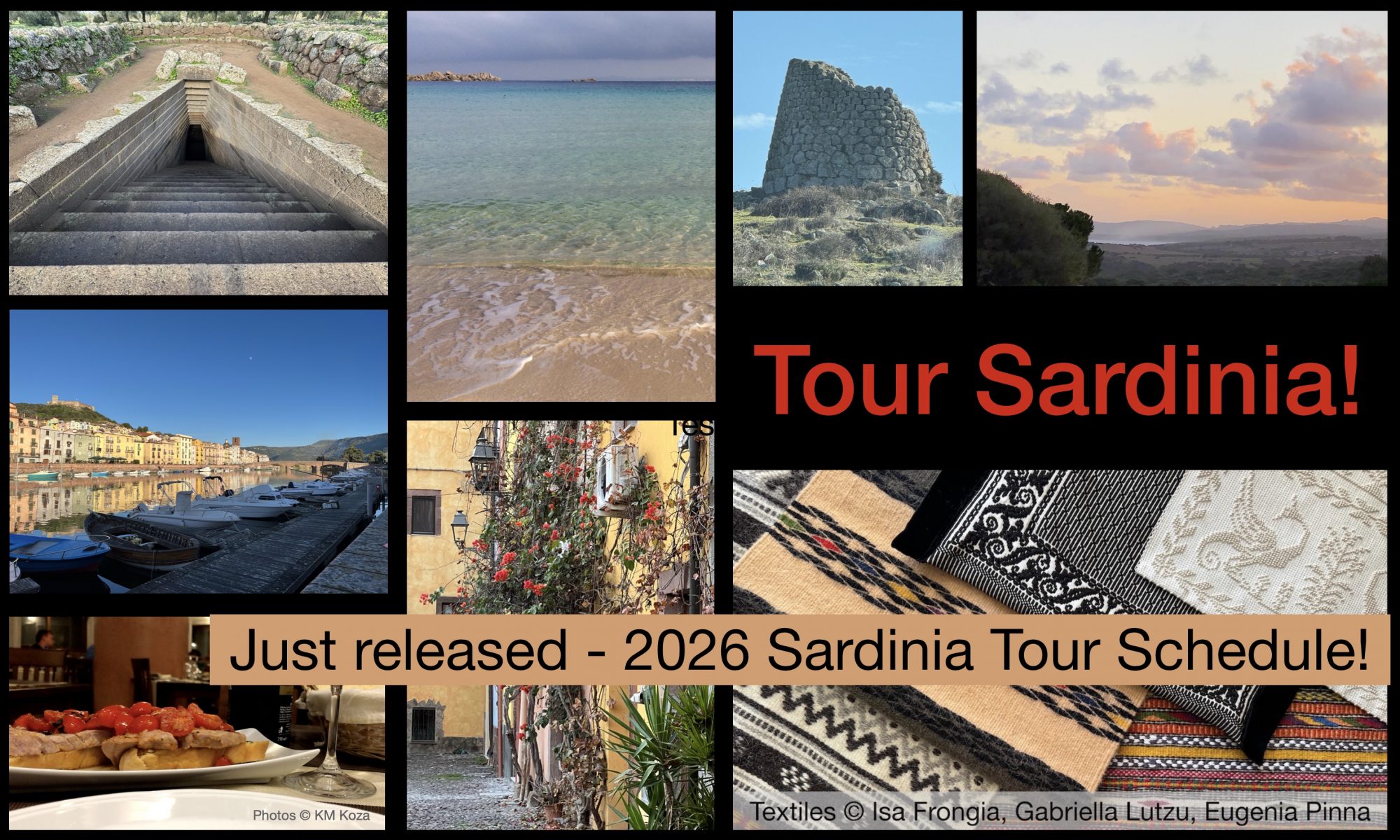
I just released details and registration for two 2026 tours. Both include visits to handweavers featured on this website, plus much more. Check them out:
In May, we’ll spend more time with handweavers, in textile-related museums, and on textile-related adventures. We’ll also visit natural, historic, and sacred spaces of the island.
In October, we’ll visit the handweavers, yet spend less time on textile-related adventures and more time exploring other arts and cultural, historic, sacred, and natural areas. Weather permitting, the October tour may include a short boat excursion and a guided tour of breathtaking natural caverns.
If you’re a traveler — weaver or not — who wants to experience Sardinia and the island’s beauty, arts, culture, history, nature and textiles, come join me on a tour!
A recent conversation prompted me to share this reminder, applicable to textile enthusiasts, weavers, and other artists – as well as in general!
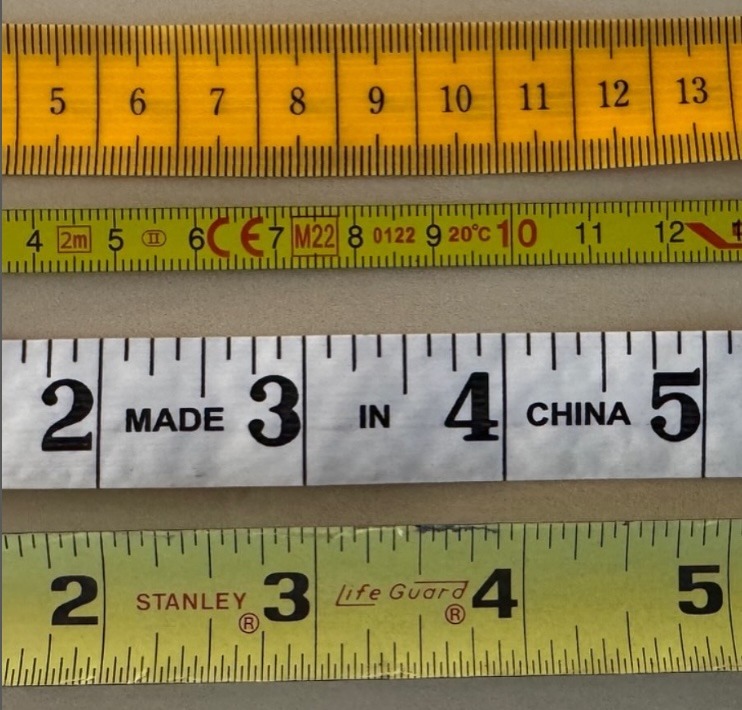
The USA is one of only few countries* in the world that uses the Imperial system of measurement – that is, inches, feet, yards, and miles instead of centimeters, meters, and kilometers.
When you’re talking with or writing artists outside the US, consider giving your measurements in centimeters (cm).
Buy a metric tape measure, or use an online converter or your gizmo’s calculator to convert inches to centimeters.
Remember not all tape measures are created equal! I’ve bought some that have incorrect measurement markings. Others can stretch over time. Tape measures with Metric measurements on one side and Imperial measurements on the other side can be incorrect on one or both sides.
The tape measure you use may differ slightly from the one the artist uses. Especially for large textiles or artworks, the measurements you make and the artist makes may differ if you are using different or inaccurate tape measures.
Leave some leeway! This is especially true for textiles, which can stretch and shrink with weather and other conditions.
*The other countries are Liberia and Myanmar. The UK uses a mix of Imperial and Metric.
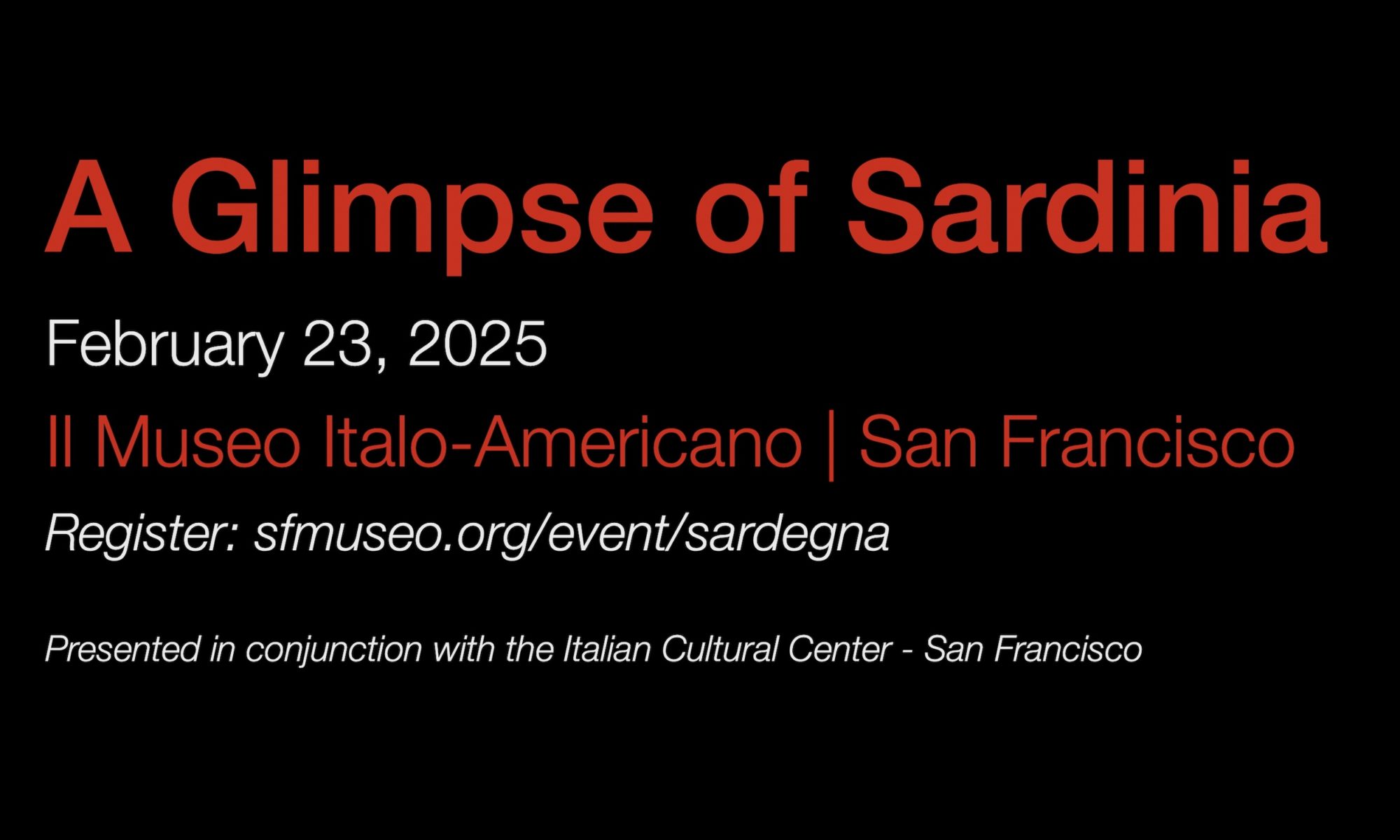
Kelly Manjula Koza, founder of Sardinian Arts, will share photos, film clips, and stories of the island with a focus on the tessitrici artigianali — the unique women weavers who maintain Sardinia’s ancient handweaving tradition, artfully expressing the Sardinian spirit through their work and textiles.
Discussion and tastes of traditional Sardinian food will follow the presentation.
A Glimpse of Sardinia, Sunday, February 23, 2025, 4.30 to 6.30pm Museo Italo Americano Fort Mason Center, 2 Marina Boulevard, Building C San Francisco, CA 94123
I value the tessitrici artigianali, the women handweavers of Sardinia, as artists worthy of respect in their own right — not as producers of other peoples’ designs.
Over the years, I’ve come to realize that not everyone regards the handweavers in this way. I’ve been contacted by many interior designers and clothing designers that view the Sardinian handweavers merely as potential producers of the designers’ own items. I’ve also been contacted by large companies that see the tessitrici artigianali only as possible sources of Sardinian textiles that can be copied and produced in the corporation’s offshore factories.
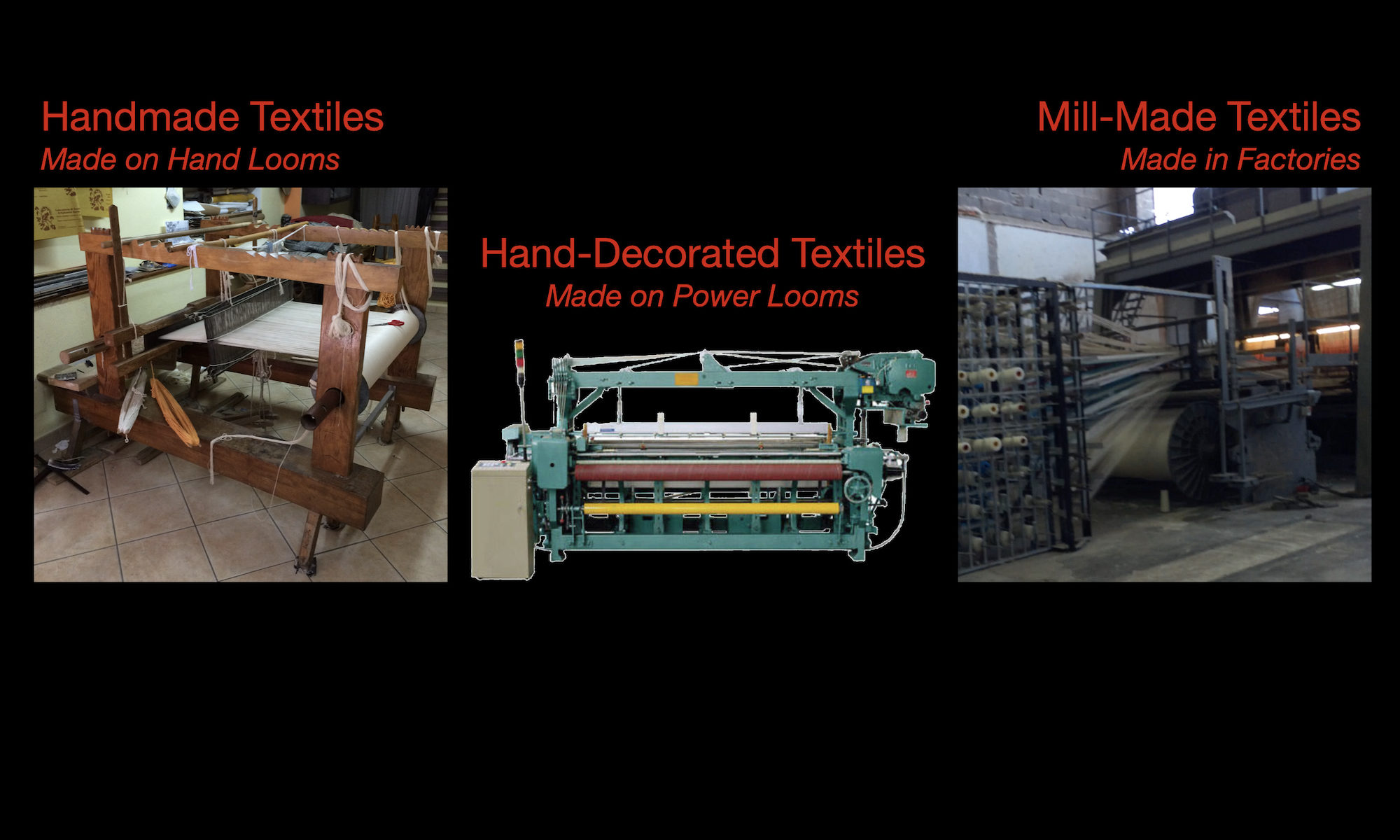
Most interior designers seek textile producers to make rugs or other articles fashioned by the interior designer. The designers want the articles produced exactly to their specifications at a low price — a price which is at least doubled, sometimes tripled or quadrupled, for the designer’s profit when selling to their client. The interior designers command an even higher price from their client by stating items are “Handmade in Italy” — even when the articles are not truly handmade, but are made in power-loom shops — and even when the additional profit gained from the “Handmade in Italy” label is not shared equitably with the actual makers, the weavers.*
Clothing designers also seek textiles “Made in Italy” for the increased status and payment the “made in” and “handwoven” labels will bring, yet the designers generally do not want or value the finished integral textile art created by handweavers. Fashion designers merely want low-cost fabric they can use as a component in their own label of bags and clothing, not the beautiful rugs, bags, table runners, and other finished works created by the handweavers.
Similarly, large multi-national fashion houses often seek to “source” fabric and designs from Sardinia. When I’ve questioned the representatives who have contacted me from such corporations, they’ve brazenly confirmed they want Sardinian textiles to copy for corporate-branded items that would be made in corporate-owned mills in Asia, and sold for corporate profit. At least two of the corporate reps have hinted that I would be well paid if I were to provide them with samples they could copy — which I do not. After I refused one corporate rep, he even tried to pose as an independent individual by contacting me from his personal email address to request samples.
As well as having said “No!” to these large corporations, I’ve declined to work with designers and small business owners who have sought to appropriate Sardinian textiles and/or designs for their own profit, and without giving due credit and pay to the handweavers. I don’t support or participate in such activity — it’s not respectful or dharmic (right action).
While individuals and cultures always influence one another, outright intellectual and artistic theft, cultural appropriation, and colonialism have run rampant across the world for centuries. These activities negate cultures and individuals, and have created a social, economic, and ecologic mess across the globe. To steal the designs and heritage of the traditional women weavers of Sardinia for the profit of foreigners is not right. To consider the tessitrici artigianali merely as producers of items that will profit foreigners is also not right.
The tessitrici artigianali are endowed with an esteemed heritage, possess incredible artistic and design skill, and apply time-honored STEM (Science, Technical, Engineering, and Math) and problem-solving skills in all aspects of their work. The women weavers lovingly and skillfully create textiles of modern and ancient design — art of their own, and art of tradition. The ancient and modern handwoven textiles of Sardinia are museum-quality works of art, created by artists who are invisible to the world primarily because they are women, and also because they are from a small island discounted by the commercial world except as a source of cheap labor or goods. To purloin the art and skills of the tessitrici artigianali for off-shore profit is adharmic — not right.
I firmly believe that to change the world, we must change how we are in the world — and this includes changing how we do business. Respect for one another, for the earth, and for ourselves must be foremost, and we must keep this respect in mind when we act, including in business. This concept is not new; it’s actually rooted in ancient traditions of all lands, including India, the Americas, and Sardinia. In reality, the slowly-growing interest in ethical business is a resurgence, not a new concept. As part of this resurgence, the peoples, arts, culture, heritage, wisdom, tangible riches, and intangible wealth of all lands — including Sardinia — must be recognized and honored.
The fact that many in the United States do not know about Sardinia and its grand history is no excuse for refusing to learn about, acknowledge, or respect the island’s vast heritage. Sardinia was a key player economically, culturally, scientifically, and politically in Early and Modern European, Byzantine, Roman, Punic, Phoenician, and other time periods. As recently as 1860, The Kingdom of Sardinia extended over a large portion of Continental Europe. Prehistoric Sardinia was as magnificent as Egypt, Mesopotamia, Colombia, and other areas that were once centers of civilizations that are now lost. The architecture, arts, crafts, music, science, and other aspects of Sardinia’s cultural and heritage have been — and still are — overlooked, discounted, and even intentionally destroyed by classic historians and academics.
The Sardinians are keepers of great gifts. This is especially true of the tessitrici artigianali, who bear the wisdom, traditions, and skills of their art as well as a compassionate manner of curating their work and world. The consideration, attention, and love the women weavers bring to their art and lives is lacking in the world of technology and business. This lack is largely responsible for the sense of “something’s missing” that many people feel. Consider a meal prepared with home-grown ingredients and cooked for beloved family and friends; a shirt made by hand with attention to detail and loving throughs for the person who will wear it; or a handwoven rug carefully, thoughtfully, lovingly made by an artist: The essence of what these give us is unquantifiable and inimitable, even by the best technology. These items are made with care and love, the invisible building blocks of a diverse yet complete humanity.
Our planet and our humanity are being threatened to the point of destruction by greed, hatred, and indifference. Bringing respect, care, and loving attention into our actions and the items we use will help restore our humanity to each one of us. As individuals who live and act with care, attention, and compassion, each of us can help restore humanity to the world.
While it may seem a small thing to respect the traditions, art, and rights of a small group of strong women handweavers in Sardinia — the tessitrici artigianali — we must remember what ancient cultures have long known, and modern science is rediscovering: no one and no thing is small, or independent. We’re all interconnected and interdependent parts of a greater whole, like the individual fibers of a handwoven rug.