I really dislike having to write posts or notices like this.
Sadly, just as there are AI-driven sites (often with unscrupulous people behind them) poaching articles, photos, and other work I have personally created by hand, with love and respect, there are now large companies in Asia trying to poach the Sardinian Arts name, logo, and more.
Please beware. Do not fuel these companies and individuals. These unscrupulous parties are trying to profit from Sardinians and the love, care, and dedication Sardinians — and I — have for their island, culture, heritage, and arts — and my integrity in working to honor and preserve these through the work I do with Sardinian Arts.
I’ve been exploring corners of Sardinia since 2013, and soon I’ll be sharing my love and favorite people, places, and experiences with you on these tours!
Transcript
Welcome to another episode — and thanks for tuning in!
You may have seen on the website that I’ve organized several tours for those of you who want to explore Sardinia in 2026. I’m excited about these, primarily because I’m really looking forward to sharing my love of Sardinia and the joy I feel on the island, the experience of being with welcoming, wise, grounded and artistic people, of being in a place where the beauty of land, sea, nature, arts, and culture seeps into everything, and embraces us in a way of being that welcomes and extends our humanity.
I personally designed these tours for travelers who want to experience Sardinia, not merely glimpse what’s generally shown on social media or found in tourist books. I’ve been exploring and getting to know the island and her people more deeply since 2013, and I chose and matched adventures for the tours that will give you unique experiences that expand your appreciation of Sardinia’s natural beauty, culture, history, people, and arts — including food, wine, and — of course — textiles!
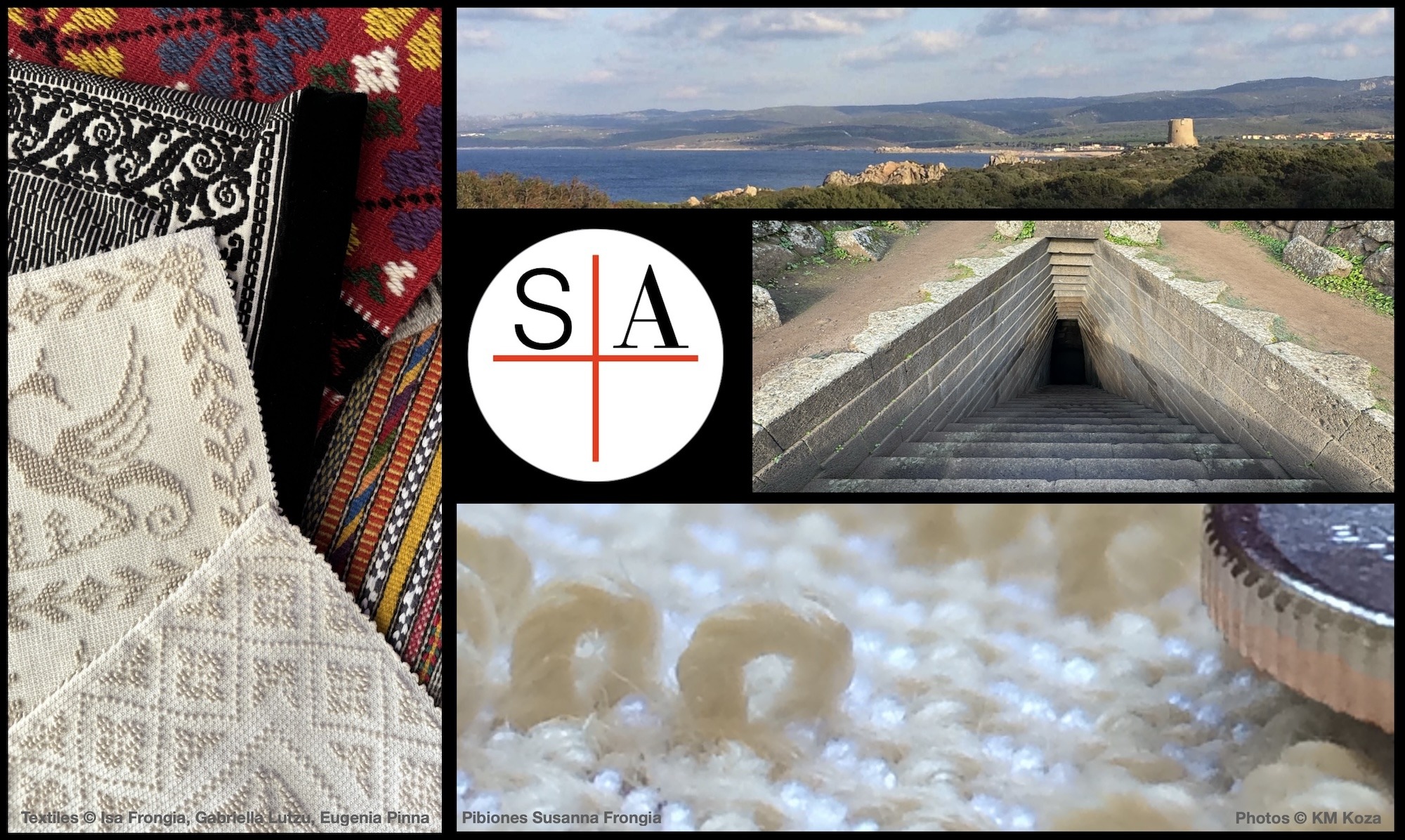
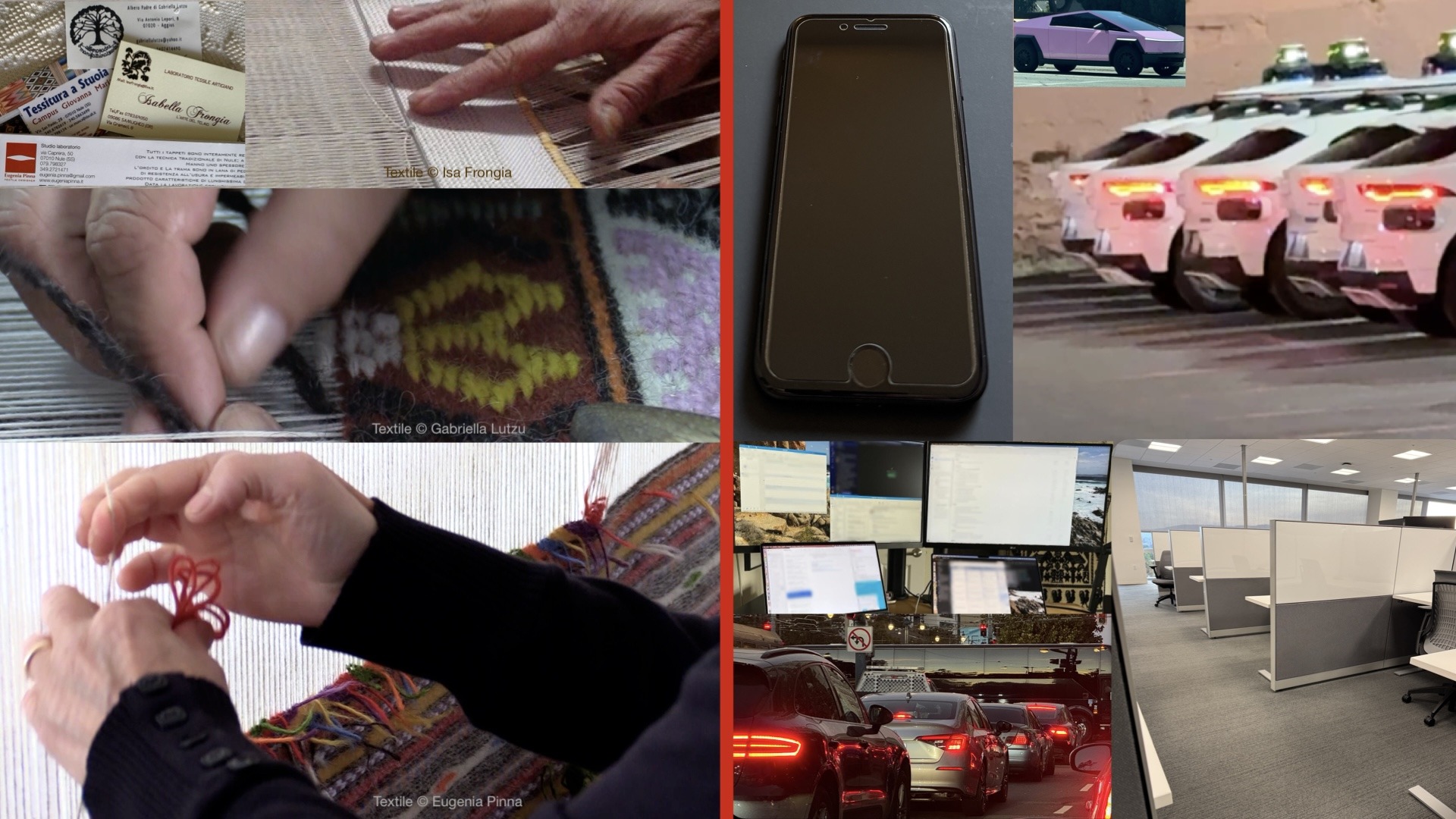
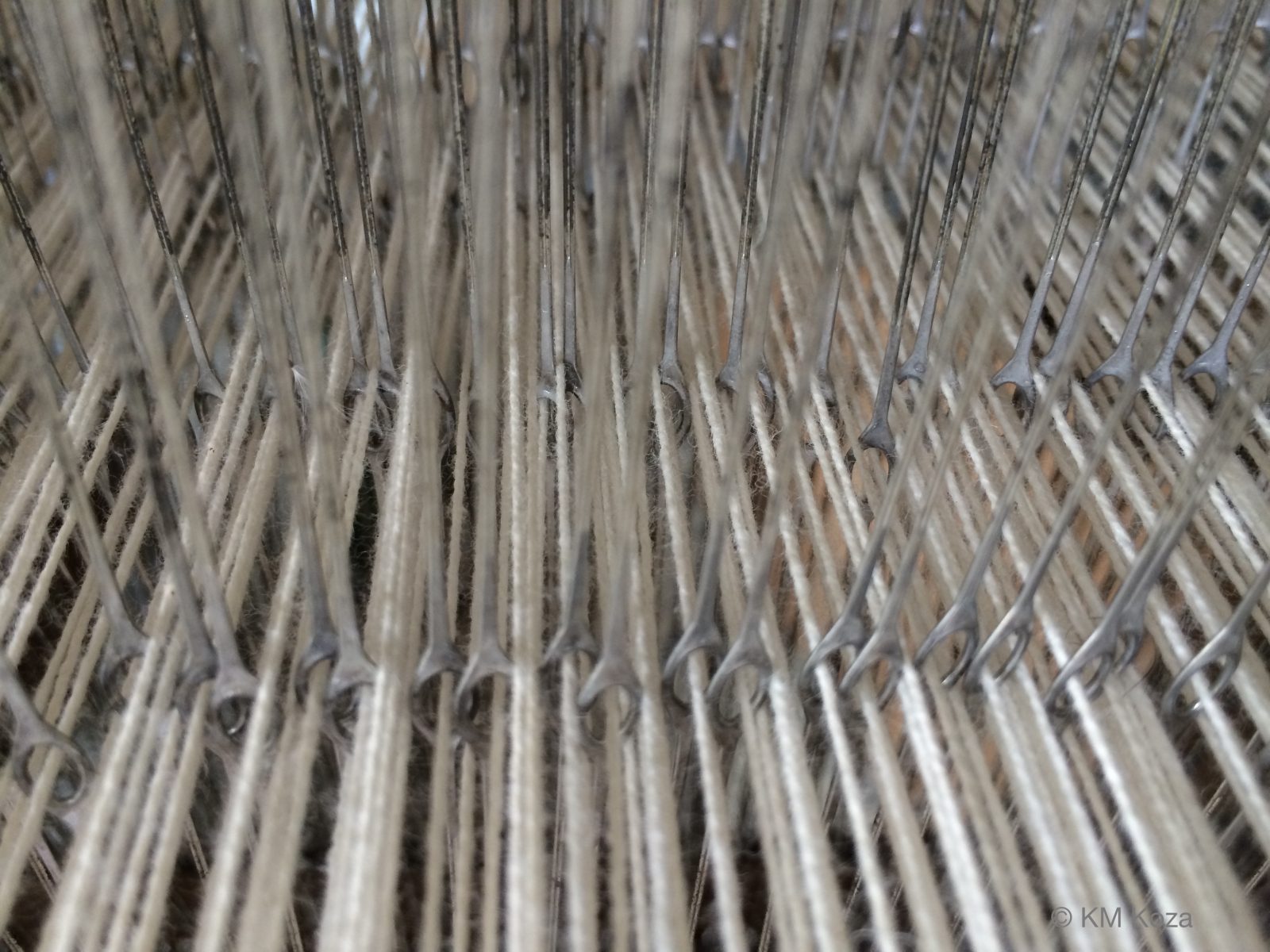
Yes, we’ll visit the traditional handweaving artists mentioned on the Sardinian Arts website, including those featured in my film I Want to Weave the Weft of Time. If you’ve wanted to learn the pibiones technique, you’ll have the chance to learn from the living masters! You’ll also learn about Sardinia’s other weaving traditions and techniques, as we’ll visit several weavers in their studios in different areas of the island. While you can try your hand behind a loom, these are tours to introduce you to the artists and their ways, not workshops where you’ll create a textile to bring home. I do, however, encourage you to purchase finely woven textiles or other items directly from the artists we visit!
In addition, we’ll visit some fibers-related shops and explore wonderful museums that have inviting displays of traditional clothing from across the island, and allow us to immerse ourselves in ethnographic experiences of the everyday life and tools of Sardinia through recent centuries. We’ll see the history of several other arts and learn about cheese-making, food-preparation, and more. We’ll also have hands-on experiences beyond textiles, such as learning how to make — and making —several varieties of traditional Sardinian pasta shapes with a master chef.
Even if you’re not a textile artist, there’s a tour and adventure for you.
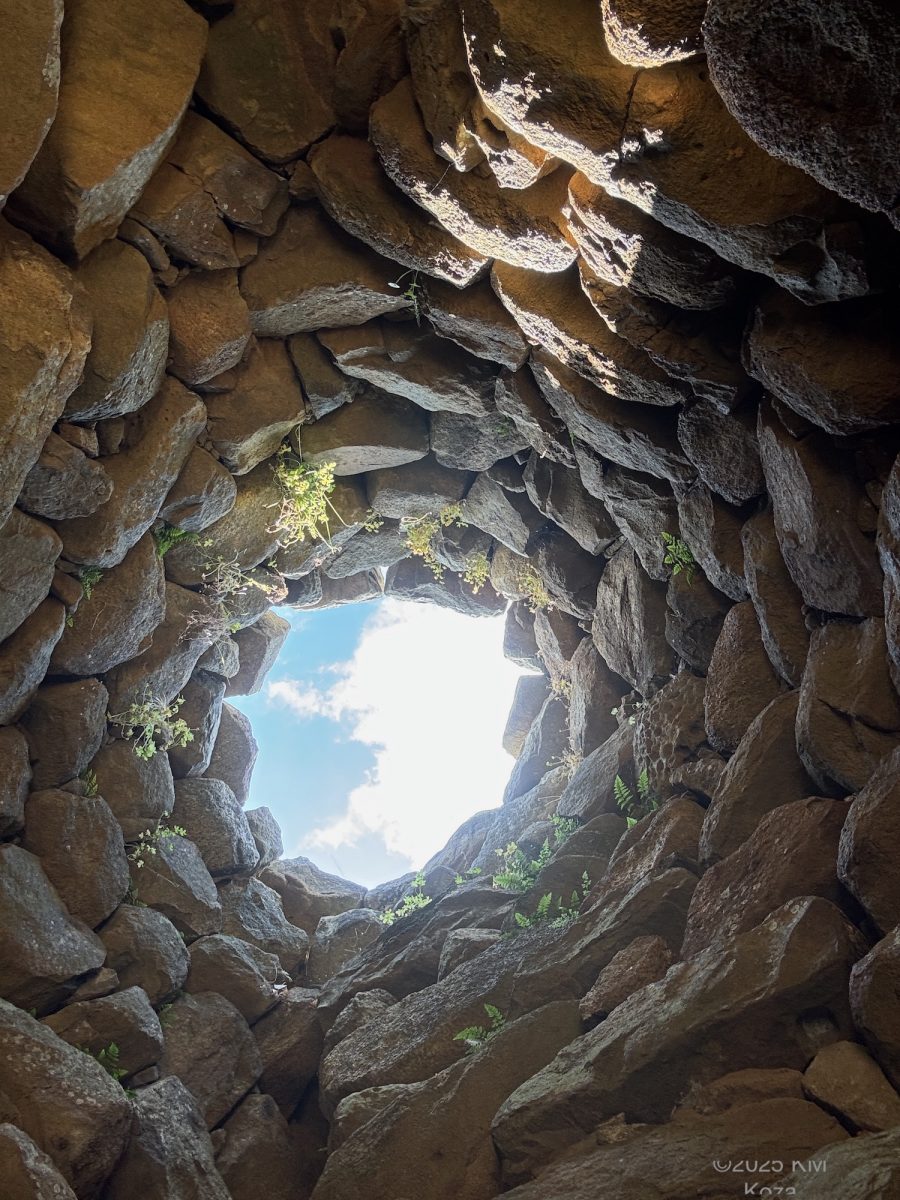
We’ll explore places rarely traveled by visitors and also take in some of Sardinia’s well-known and often breathtaking landmarks. We’ll visit prehistoric nuraghe, the famous towers that dot Sardinia, some still standing tall, some not so intact. Many are unique structure; some have attached settlements. We’ll see tombs of the giants and sacred wells, millennia old, that are aligned with lunar phases. Some of these wells, as well as sacred fountains, have been used by succeeding civilizations, such as the fountains in the Roman town of Tempio Pausania —still a thriving town —or the Sacred Seven Fountains in San Leonardo, which became a monastery and hospital for knights returning from the Crusades.
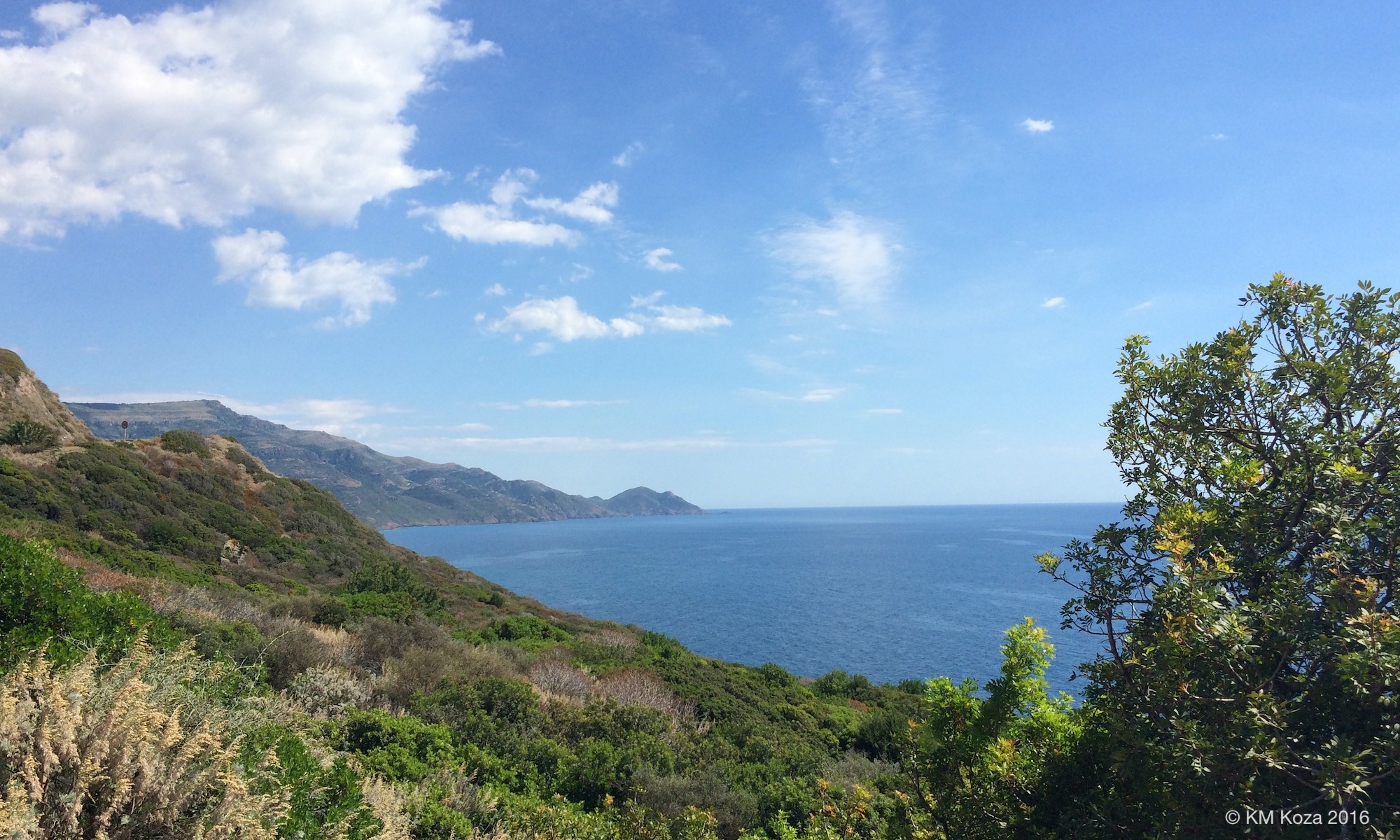
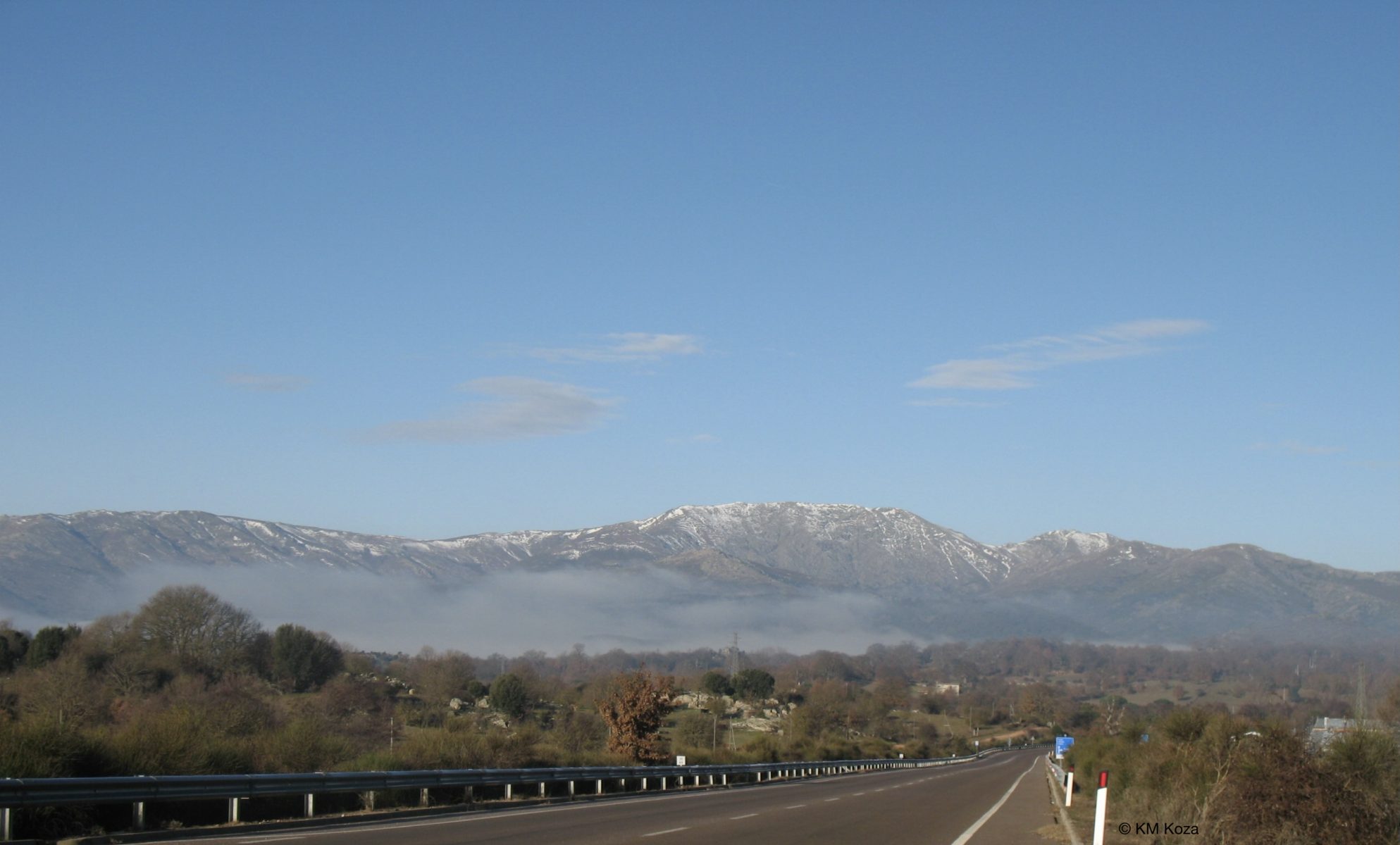
Roman centers and baths with still-accessible hot springs are on the itinerary, and we’ll travel over Roman bridges still in use, and sometimes, on modern highways that follow the routes laid down by Roman roads. We’ll also visit Spanish towers —small castles —and historic city centers with roots hundreds – or sometimes thousands – of years old. As we travel, we pass so many monuments, churches, and towns of different ages that it’s impossible to stop at each one we see! The scenery of the island is diverse, and as we move from region to region, we go from sea-facing cliffs to beautiful vistas of il mare, to inland, rich with forested hills, rough mountains, and high plains, then back to dramatic areas of expansive seashore rising into rugged mountains.
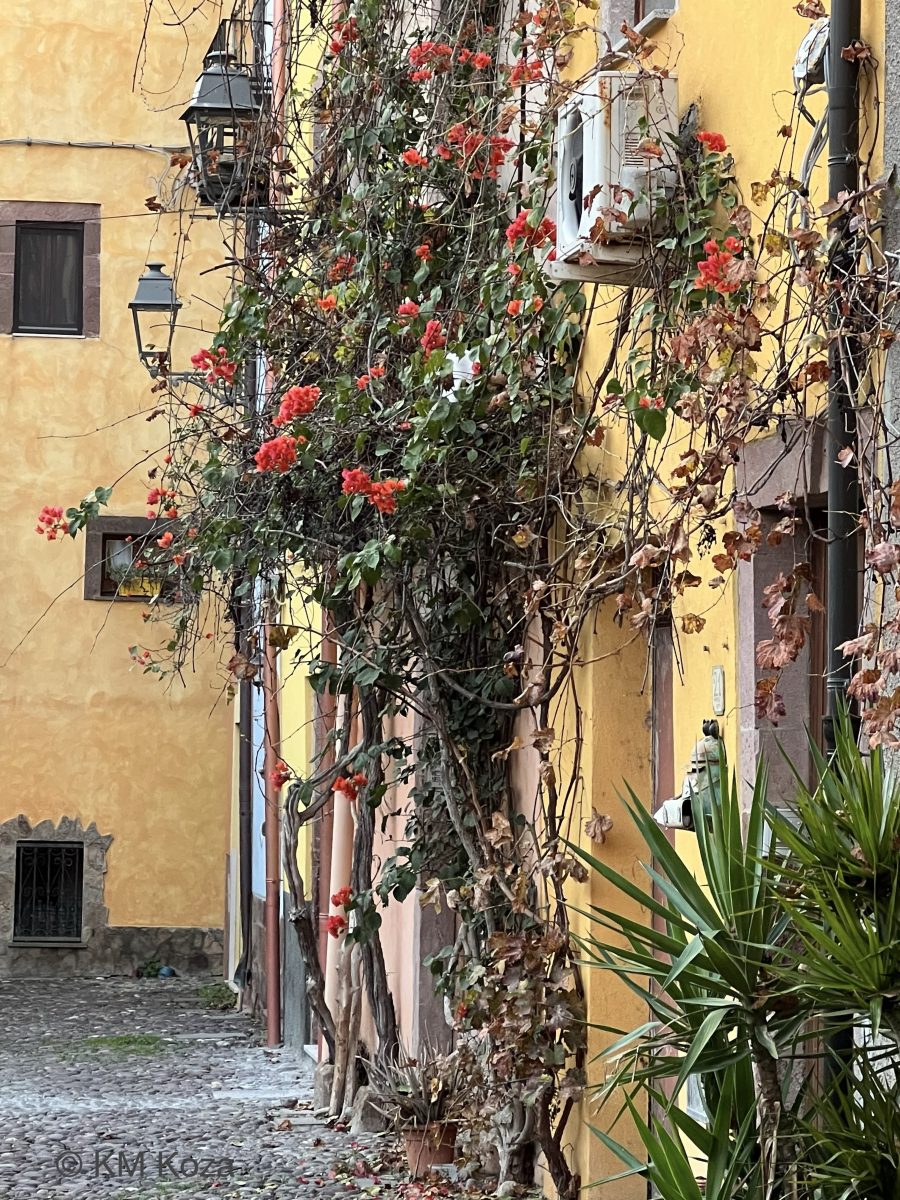
We’ll spend some time relaxing at indescribable beaches —Sardinia has many of the beaches listed as the most beautiful in the world —and take short walks to absorb nature’s scents and sights along the seashore. We’ll also spend time in old city centers, where you’ll experience stone-lined streets, quaint alleys, centuries-old buildings housing exquisite restaurants, tiny arts shops, and more. We’ll stay in beautiful hotels and country estates with exquisite home-prepared food and wine — there is so much to delight your mind, senses, and spirt! On one of the tours, weather permitting, we’ll even take a boat ride to a stunning cave at the base of an oceanside cliff —and take a tour inside the cave! Sardinia is both rough and gentle, and there’s so much to see, sense, and feel that it’s hard to describe.
While we experience much, the trips have a relaxed pace so that you can better feel and imbibe Sardinia’s unique essence. Itineraries are a bit flexible to ensure we can take advantage of any synchronistic opportunities to attend micro-local events that may pop up, or adapt if the weather surprises us. I personally organize and direct each tour, based on my experiences and knowledge of the island, to provide amazing, memorable, and relaxing experiences you’ll treasure. An assistant tour director will accompany me, and Sardinian guides and artists will share their expertise as we move through the island. Groups are limited to a maximum of 12 guests, which enables us to get to know one another comfortably. The small group size also ensures we won’t overwhelm our hosts or the locations we visit. During registration, I’ll also talk with each guest to ensure the tour is the right fit for you.
I’ve planned two tours for 2026, one in the spring, and one in the fall. The May tour emphasizes Sardinian handweaving while also bringing us to natural, historic, and sacred spaces of the island. The October tour explores handweaving and other arts, and offers a few more excursions to natural, historic, and sacred spaces. Both tours are definitely for travelers who want to gain understanding and have experiences that are not found on the typical Sardinian tourist itinerary!
As I said at the start of this episode, I’m really looking forward sharing my love of Sardinia and the people and places we visit with you on these tours. So, if you’re a traveler — it doesn’t really matter if you are a weaver or a textile aficionado or just a lover of culture, if you’d like to experience Sardinia and the island’s beauty, art, culture, history, nature, textiles, and people, do come join me on a tour! See SardinianArts.com/Tours for more info, and email me at KMK (at) SardinanArts (dot) com if you’d like to come to a Q&A session about the tours, or know more.
I look forward to hearing from you — and to having you join a tour with me.
In this episode, Kelly Manjula Koza discusses the unquantifiable value of the handmade, the priceless process of making, and the ineffable understanding that a handwoven textile is more than just a thing. These are golden elements the Sardinian handweavers and artists teach us. This understanding is a leitmotif you’ll find runs throughout Sardinian Arts.
Transcript
This podcast was taken from the article of the same name on the Sardinian Arts site, so see that page for the transcript. I decided to record the piece as a podcast because it is an important message, one many people have told me strongly resonates with them.
In this episode, Kelly Manjula Koza talks of the magnificence that is Sardinia.
Transcript
There’s absolutely no way to describe Sardinia’s magnificence.
The land, the sea, the people; the traditions; the food, art, and culture: all are beautiful, unique, and diverse from region to region, and even from town to town.
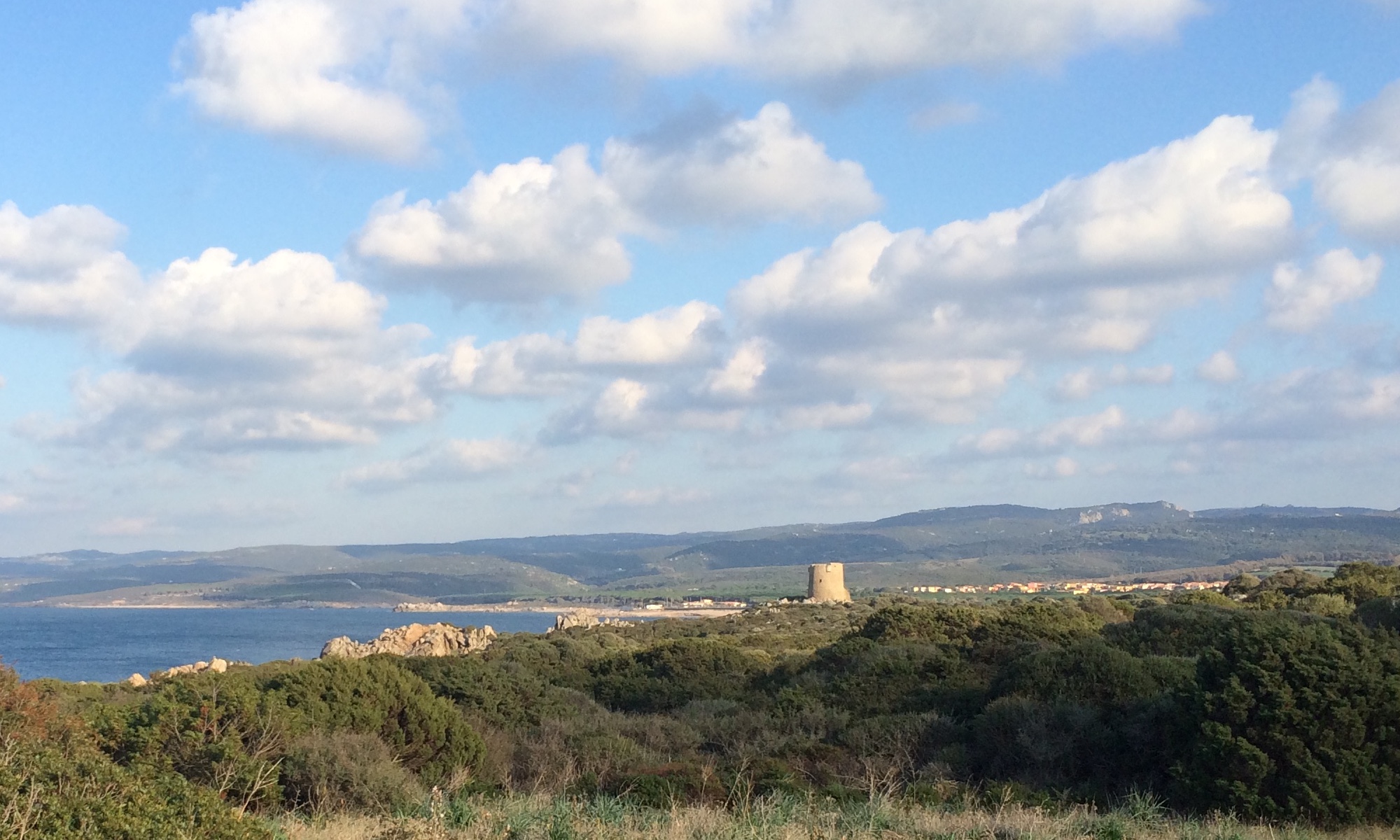
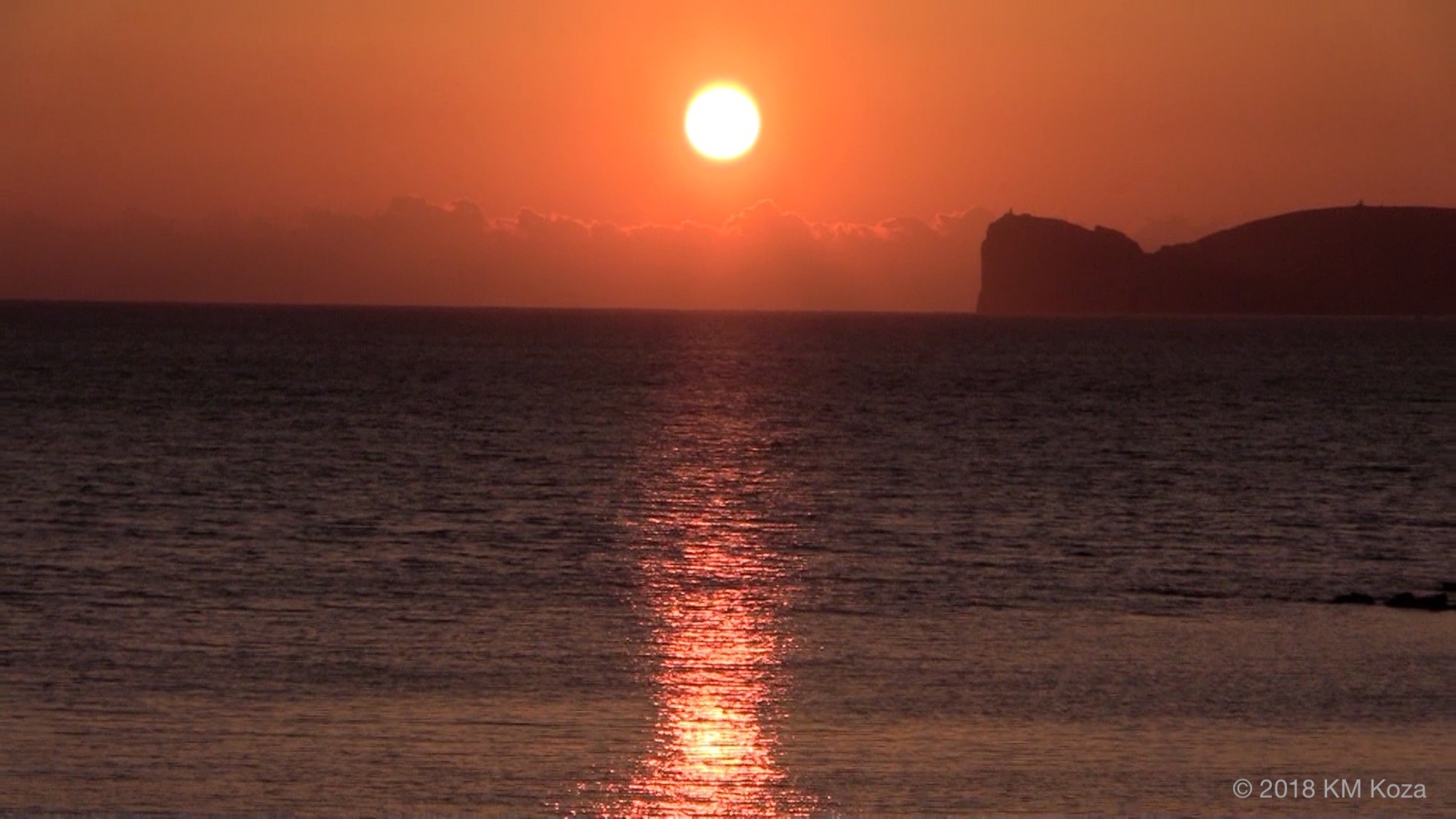
To me, as to many, a principal feeling, memory, sensation of Sardinia is the sound, the scent, the feel of the sea, the breeze, the flora – all meld into one sensation. The scent of mirtillo, the unique type of myrtle found on the island, perfumes the sea breeze that envelopes you when you arrive in my favorite region, Gallura, and descend from the plane or ferry. Gentleness and beauty contrast with the vast mountain ranges, the sea — which is sometimes rough, sometimes tranquil — the rocky shores, the sandy beaches, the beautiful wilderness. Sardinia is a place of immense beauty and intense contrast in many ways. As you travel across the island, you of course really can’t — and wouldn’t want to — miss the beaches. Most tourists come only to the edges of Sardinia to enjoy dozens of beaches considered among the most beautiful in the world. They are. Yet so much else about Sardinia is wonderful and beautiful, from the nature, certainly, to the culture, the people, and the experience of being on an island whose history spans millennia, and whose modern presence embodies and carries forth waves of history with quiet pride.
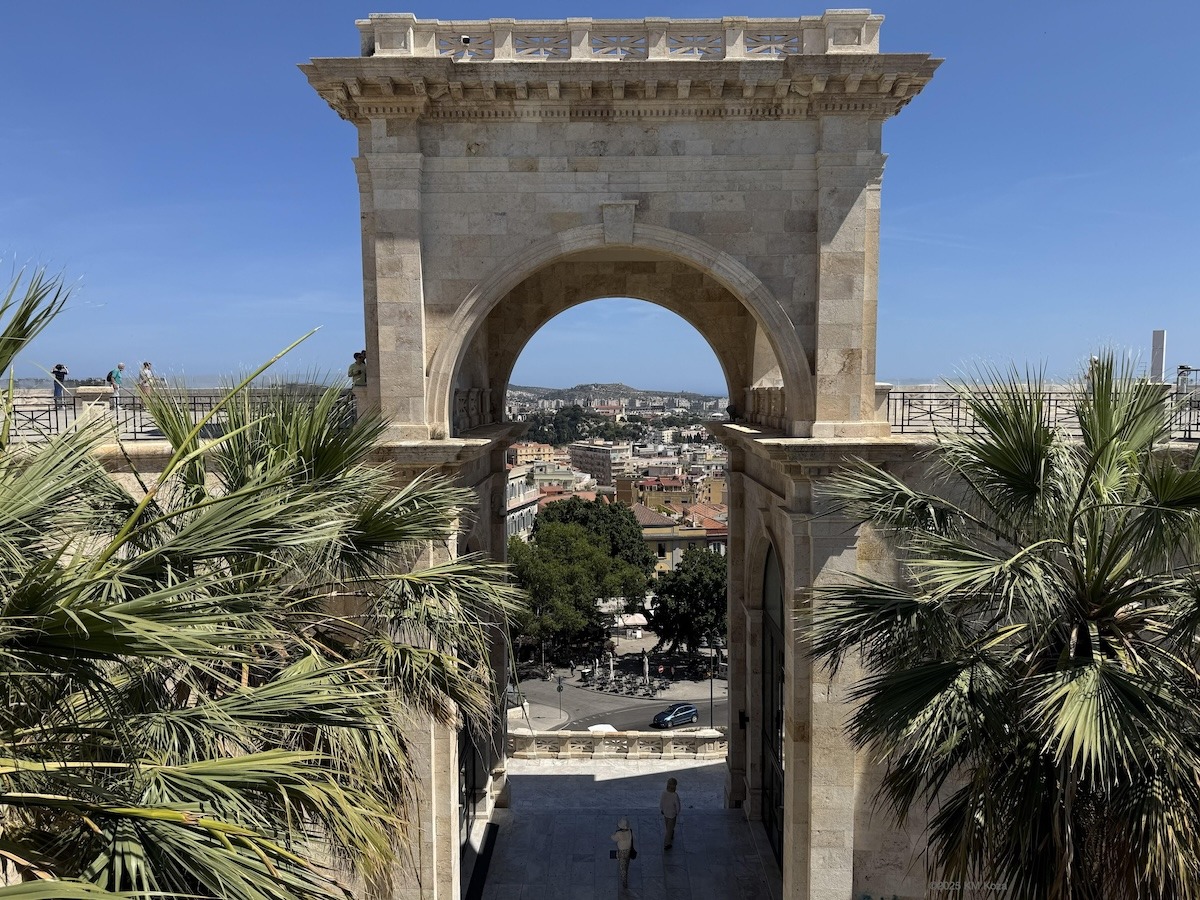
The contrasts and beauty are tangible and commonplace. Within five minutes, you can go from a rugged, rocky, windy beach to an exquisitely-prepared fine dinner served in a luxurious atmosphere. Or, you can go from walking in a cave open to the sea to a boat that will transport you quickly to shores not long from a five-star hotel. In the course of one afternoon, you can visit an ancient monument, cross a still-used Roman bridge to tour a medieval Spanish castle, dine in a restaurant housed in a 500-year old building that seamlessly integrates the latest technology into beautiful surroundings.
Long considered a gem of the Mediterranean, Sardinia is now an autonomous region of Italy, boasting a distinct history and traditions. Phoenician, Byzantine, Etruscan, Roman, Spanish, Eastern European, Italian, and other cultures have all touched — and been touched by — Sardinia.
While most Sardinians speak Italian, many also speak their native Sardinian, which is the closest living language to Latin. There are actually four or five main Sardinian languages, with variations within each. Most are similar, yet the Gallurese language of the Northeast is much different, related to the language of Corsica to the north, for Sardinia and Corsica were joined by a land bridge thousands of years ago. And, in Alghero in the Northwest, Catalan Spanish is commonly spoken. As you travel across the island, you’ll experience that different areas and different towns have their own dialects, as well as their own costumes — which are traditionally brought out for holidays and tourist events — as well as their traditional foods, wines, songs, and more. Such diversity on the island — and the diversity spans time as well as geography
Prehistoric structures of all types abound: Scattered across the island, you see towers, or nuraghe, as well as sacred wells, tombs of giants, astronomically-oriented structures, huge sculptures, and village centers indicative of the advanced knowledge which Sardinia’s inhabitants had millennia ago. Phoenician cities, Roman towns, baths, bridges; medieval wells, churches, and castles — some built over and incorporating prehistoric structures — remains of these and so much more are part of everyday life in Sardinia.
Sardinia the island is about the size of Vermont — or, for those who live on the West Coast, about the size of the greater San Francisco area. The geography found on the island encompasses pretty much everything you would find across the United States. In addition to the beaches, you find mountains that rival the Rockies; cliffs, caves, areas of high desert, sand dunes, marshes, lakes, and rivers. Certainly there are areas of Mediterranean terrain, and dense forests of redwood, pine, and oak; fields of hay, wheat, mand vineyards, and so much more.
Tourists do tend to flock to places famous for their beaches, such as Costa Smeralda, Costa Paradiso, Alghero, Cagliari, and Stintino, yet increasingly, visitors also come to mountain climb, cycle mountain paths and windy roads, hike, motorcycle, and to visit museums, cultural sites, and historic sites. Museums and cultural sites not limited to cities – although Cagliari, Sassari, Olbia, Oristano, Nuoro, and Alghero have their share of wonderful museums. Many small towns also have unique museums, arts centers, and artists who carry forth centuries old — or older — traditions alongside modernization.
Sardinian artists are traditionally renowned for their work in metal, jewelry, knife-making, basketmaking, and — of course — weaving. Artists traditionally passed a craft from generation to generation within a family and village. While the number of artists working in traditional methods has diminished, a revival of interest in preserving and carrying forth the traditions has started in the past few years. Still, Sardinian art is rarely found outside the island.
Perhaps best known of the Sardinian arts — especially outside of the island — are her textiles. As in many places across the world, women in Sardinia traditional had a loom at home and wove the bedspreads, cushions, rugs, cloths, and decorations used by the household. Weaving has been highly respected on the island since for, and it’s said that the Jana, or tiny bee-sized fairies of Sardinia, gifted the women with the knowledge of weaving.
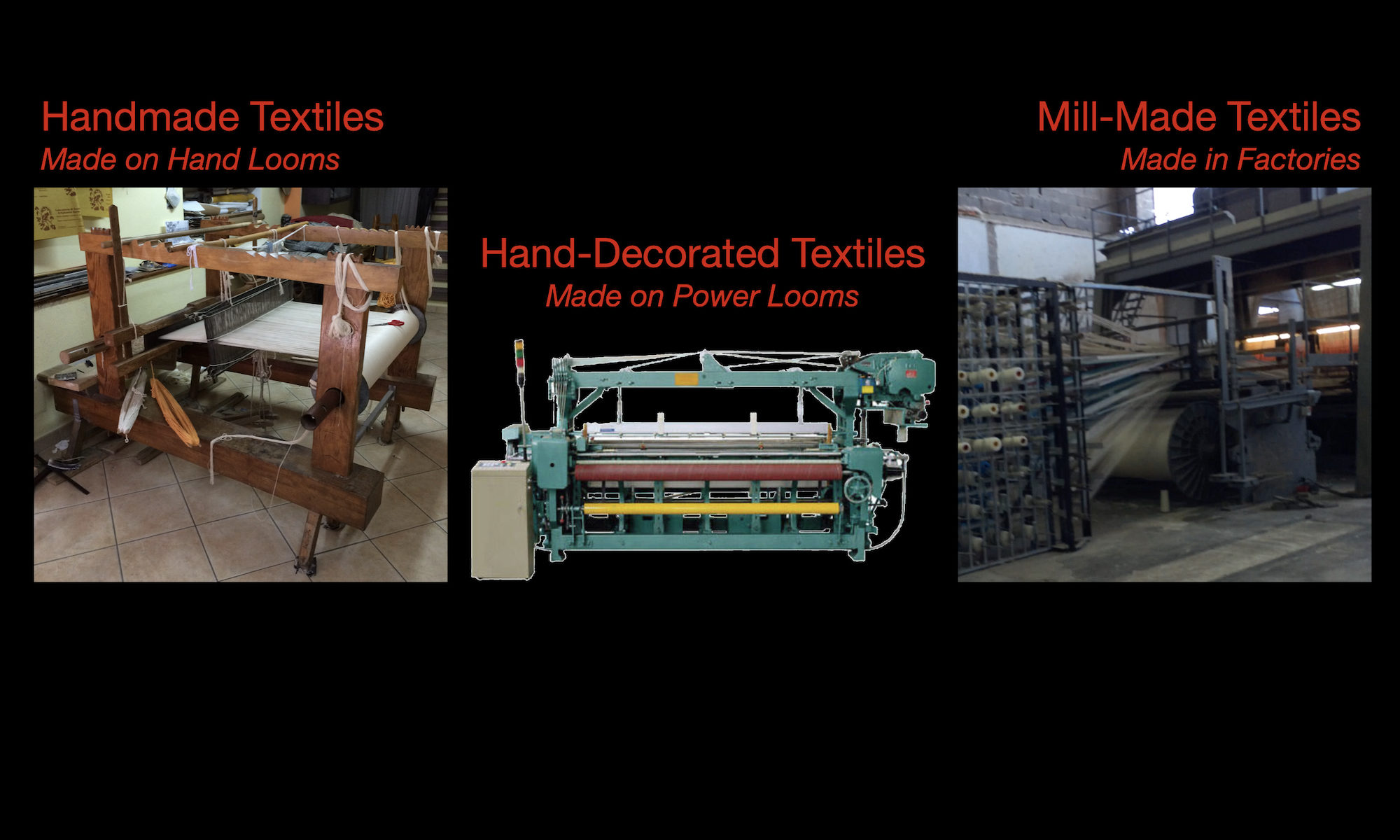
While the number of handweavers diminished after powerlooms and factories were introduced to the island in the late 60’s, the art has persisted in key areas, and it seems the number of handweavers is slowly on the rise. Samugheo, a town of about 2000 people that lies in the center of the island, nested among hills much like those found in Northern California, is perhaps best known for its textile production. There are many commercial facilities, and Samugheo is the home of the Frongias, the family that rigorously maintains handweaving in the pibiones tradition. Pibiones are tiny bumps of thread woven into rugs, bedspreads, and other items, and are the best known of Sardinian weaving techniques and traditions. The town of Nule, in the mountains north of Nuoro, has a different yet highly respected weaving tradition, as does Aggius, a town near Tempio in the granite hills of Gallura.
Traveling in Sardinia is absolutely magical — especially if you leave open room for synchronicity, and don’t over plan your trip. There are so many casual encounters, graceful people, and hidden places that have popped up in my travels that have led to amazing adventures and special friendships that never would have occurred if I had relied only on online sources, or over-planned my trips. More than anywhere, when I’m in Sardinia, I remain present, with my feet on the ground and my heart open, and this opens the way for the magical events to unfold and special people to appear.
The range of life, beauty, and emotion to experience in Sardinia is truly indescribable. I think the feeling of being in Sardinia best stated by a saying printed on the back of the Sardinian photo calendar that every visitor seems to picks up at the airport shop as they leave the island. Published each year by R. Balzano Edizioni, the calendar always has this saying on the back:
Sardinia is an island you cannot ignore. After visiting it, you will carry a memory in your heart that leaves you with a nostalgia and strange sensation, veiled with a sad yearning for something missing: It’s the Sardinia sickness.